As cyber threats continue to evolve, businesses can no longer rely solely on traditional security systems. Modern organizations need a smarter and more adaptive approach to protect sensitive data, networks, and digital infrastructure. This is where Zero Trust Security becomes essential.
Zero Trust is built on the principle of “Never Trust, Always Verify.” Every user, device, and access request must be continuously authenticated before gaining access to company resources. This approach helps organizations reduce risks and strengthen overall cybersecurity.
Key Benefits of Zero Trust Security
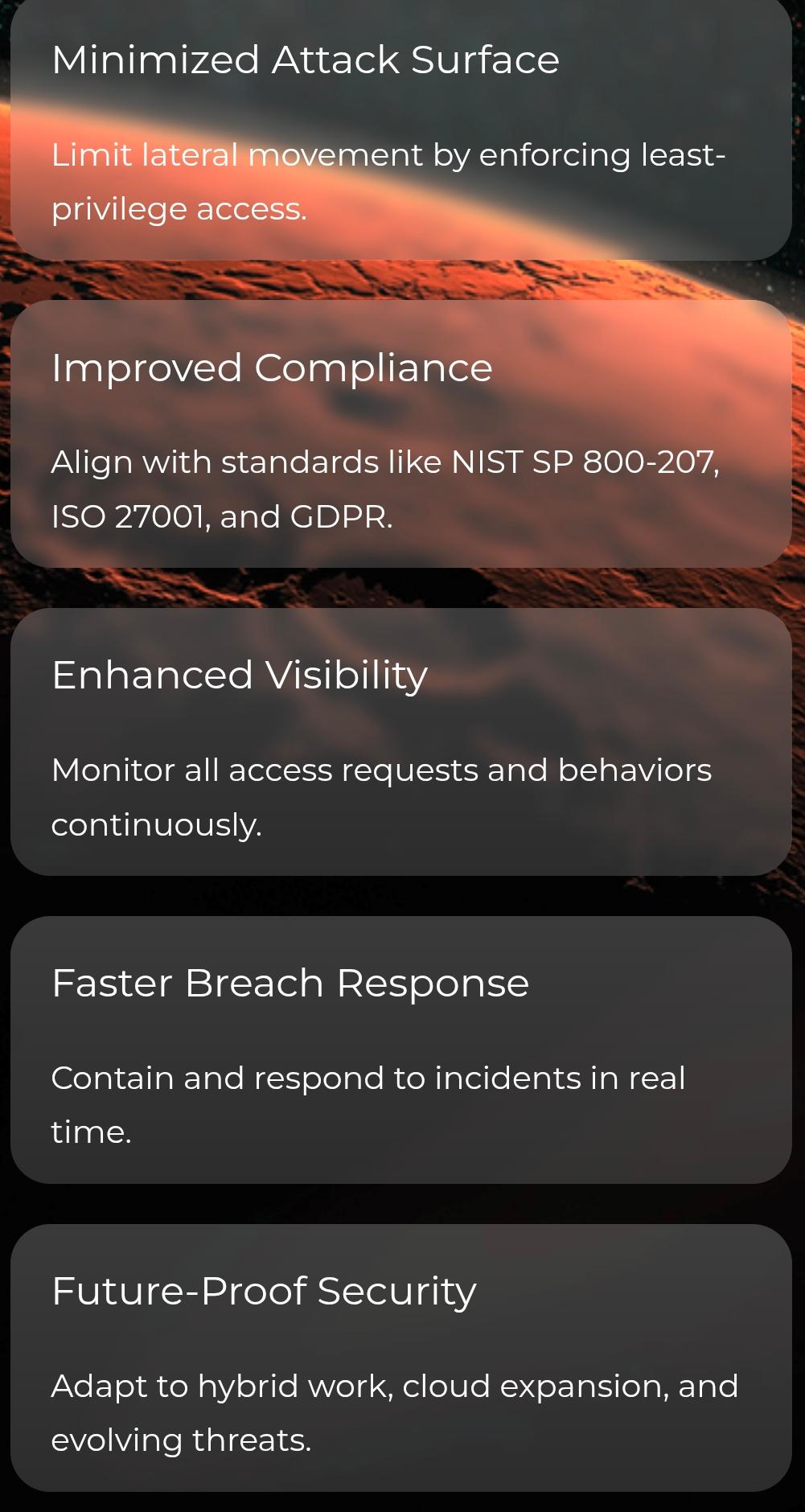
Minimized Attack Surface
Zero Trust reduces the risk of cyberattacks by enforcing least-privilege access. Users only receive access to the resources they truly need, limiting lateral movement inside the network.
Improved Compliance
Organizations can align more effectively with security standards and regulations such as NIST SP 800-207, ISO 27001, and GDPR, improving data protection and compliance management.
Enhanced Visibility
Continuous monitoring provides better visibility into user activities, access requests, and system behavior, helping security teams detect suspicious actions in real time.
Faster Breach Response
In the event of a security incident, Zero Trust enables faster detection, containment, and response, reducing the impact of potential breaches.
Future-Proof Security
Zero Trust supports modern IT environments including cloud computing, hybrid work, and remote access, making it a scalable solution for future cybersecurity challenges.
Conclusion
Zero Trust Security is more than just a cybersecurity trend — it is a modern strategy for protecting digital assets in an increasingly connected world. By verifying every access request and continuously monitoring activity, organizations can build stronger, smarter, and more resilient security systems.